What Is the Formula for the Anion Gap Without Potassium?

What Is the Anion Gap?
The anion gap is a derived measurement used to assist in interpreting electrolytes and overall acid-base balance. It is frequently examined as part of an electrolyte panel and blood chemistry workup, especially when a clinician is looking for signs of metabolic acidosis. Rather than measuring a single substance directly, the anion gap compares against the major measured positive and negative ions in the blood to identify whether there may be unmeasured acids present.
In clinical practice, the anion gap is a diagnostic marker that helps with laboratory interpretation. It can point to whether the body is dealing with an acid load, a metabolic disturbance, or another form of acid-base disorder. Because it relies on routine laboratory test results, it is often used as a screening tool during clinical assessment of symptoms such as confusion, rapid breathing, dehydration, https://anion-gap-values214.wordcanopy.com/posts/anion-gap-calculator-for-lab-result-interpretation or unexplained illness.
The concept is based on electrolyte balance. In the blood, positively charged ions and negatively charged ions should be close to balanced. The common laboratory version of the calculation uses serum sodium, serum chloride, and serum bicarbonate, with potassium often excluded in everyday clinical practice. The difference between the measured ions becomes the calculated gap, which can then be compared with a reference range.
Anion Gap Formula Without Potassium
The most common anion gap formula with no potassium is:
Anion gap = sodium - (chloride + bicarbonate)
This calculation formula uses three values listed in a standard electrolyte panel: sodium, chloride, and bicarbonate. With potassium excluded, the result is simpler and fits with many modern laboratory reports. If the values are measured in the same units used by the lab, the result is usually expressed in the same measurement unit as the electrolyte values, usually milliequivalents per liter.
An anion gap calculator handles this process. You enter the lab results, and the calculator returns the calculated gap immediately. This can be useful for quick clinical assessment, especially when reviewing a blood chemistry panel for signs of metabolic acidosis or another acid-base issue.
Calculation example:
- Sodium: 140
- Chloride: 104
- Bicarbonate: 24
- Anion gap = 140 - (104 + 24) = 12
This result would generally be within a typical reference range, though the exact normal range can vary by laboratory. The important point is not just the number itself, but how it fits into the larger pattern of the patient’s acid-base status and electrolyte panel.
Why Potassium
Potassium remains part of the original original equation, but it is often excluded in routine use because it adds for only a small amount compared with sodium, chloride, and bicarbonate. In clinical practice, excluding potassium makes the calculation easier without usually changing the interpretation in a significant way.
The standard formula that includes potassium appears as follows:
Anion gap = sodium + potassium - (chloride + bicarbonate)
Even though this version is mathematically valid, many laboratory values are reported and interpreted using the potassium-free method. Since potassium is normally present in much lower concentration than sodium, its inclusion generally increases only a small amount to the final number. For many clinicians, the simpler version is sufficient for identifying a high anion gap or evaluating a possible acid-base disorder.
There is also a workflow reason. Because the electrolyte panel already provides sodium, chloride, and bicarbonate, the potassium-free version fits more naturally into routine interpretation. That is why a modern anion gap calculator usually focuses on the three-value formula and uses those laboratory values for a rapid result.
How to Work With an Anion Gap Calculator
An Anion Gap Calculator is easy to work with if you have the appropriate lab results. The calculator is built to support quick laboratory interpretation by transforming raw electrolyte numbers into a relevant calculated gap. It is not a replacement for a full clinical assessment, but it can render gap analysis much more rapid and more uniform.
Typical calculation steps:
- Locate the serum sodium value from the electrolyte panel.
- Identify the serum chloride value.
- Identify the serum bicarbonate value.
- Enter the values into the calculator.
- Review the result and compare it with the reference range provided by the laboratory.
The calculator may also be used to assist with interpretation of an abnormal result. For example, a higher-than-expected value may suggest a high anion gap process, while a value within range may fit a normal anion gap pattern. Either way, the number should be considered alongside the patient’s symptoms, the full blood chemistry, and any other laboratory test findings.
A good calculator also helps reduce manual errors. Since this is a basic arithmetic process, mistakes usually come from entering the wrong value, using the wrong units, or reading the wrong line of the lab report. A calculator makes the process more reliable, especially when multiple calculations are being reviewed during clinical assessment.
Normal Anion Gap Range and Interpretation
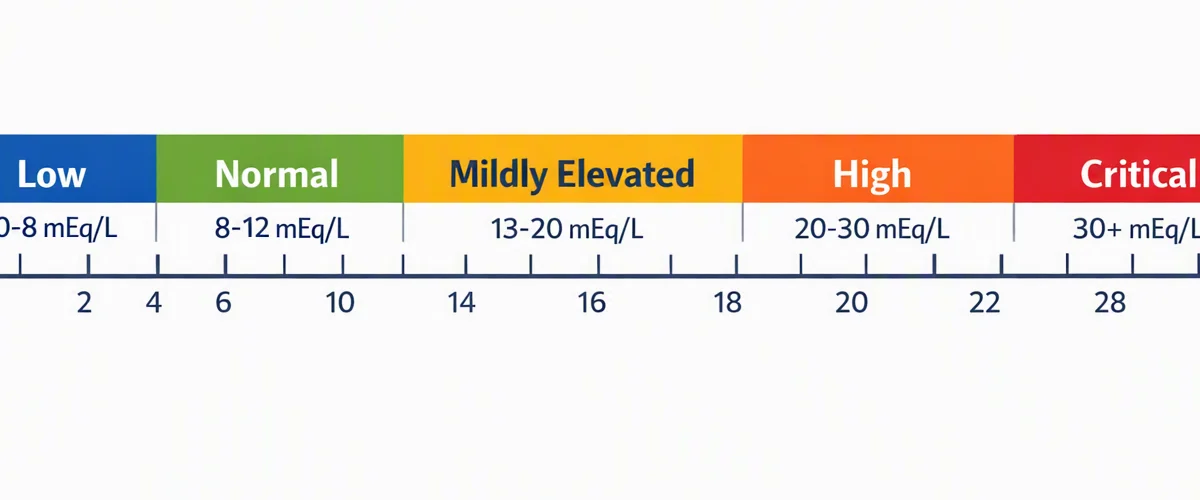
The normal range for the anion gap can vary somewhat between laboratories because methods and reporting conventions change. Many labs use a potassium-free reference range that is roughly centered in the low teens, but the exact range depends on the laboratory test system and local standards. That is why the lab’s published normal range should always be used when possible.
Assessment depends on context. An uncorrected anion gap is the raw value calculated from sodium, chloride, and bicarbonate without adjusting for albumin. If that value is elevated, it may point toward retained acids or unmeasured anions. If it is normal, that does not always mean everything is fine; it may still coexist with a metabolic disturbance, especially if another acid-base disorder is present.
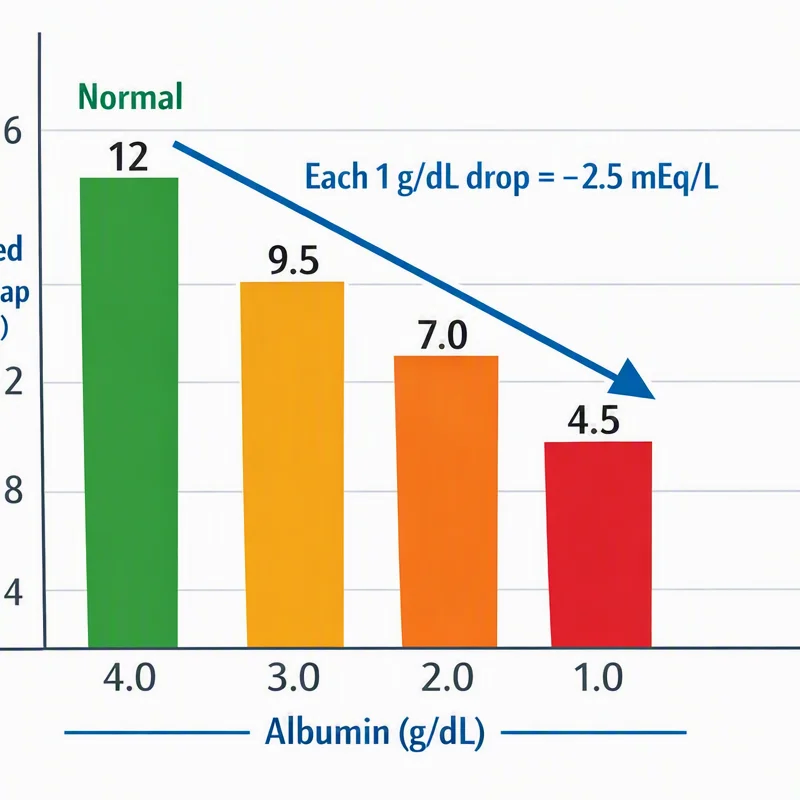
Albumin matters because it is one of the major unmeasured anions in the blood. When albumin is low, the anion gap can appear falsely normal or only mildly elevated even when there is a real acid-base problem. This is why a albumin level level is important in laboratory interpretation. In many cases, clinicians calculate a correction factor to account for low albumin.
In plain English, the anion gap helps explain a simple question: are there extra acids or other unmeasured particles in the blood? If the result is high, it can indicate a diagnosis of acid-base acidosis. If the result is normal, the issue may instead be related to bicarbonate loss, chloride changes, or another pattern of acid-base disorder.
Typical Reasons of an Abnormal Anion Gap
An elevated anion gap can indicate various conditions, and the trend matters. A high anion gap usually suggests that acid has collected in the body more rapidly than it can be cleared or buffered. This is often associated with an greater acid load and should be interpreted as part of the complete clinical picture.
Common causes of a high anion gap include:
- Lactic acidosis, in which lactate rises during reduced oxygen delivery, shock, severe illness, or additional metabolic stress
- Ketoacidosis, which can arise in diabetes, starvation, or heavy alcohol use
- Kidney failure, where acids are not removed normally
- Toxic alcohols, which can lead to dangerous acid-base disturbances after ingestion
These causes are often reviewed with the anion gap alongside the rest of the electrolyte panel and blood chemistry. The anion gap does not diagnose the cause by itself; instead, it acts as a hint that helps narrow the differential diagnosis. In other words, it is a screening tool that points toward particular categories of metabolic disturbance.
A normal anion gap does not rule out illness. For example, a patient may have a normal anion gap metabolic acidosis from diarrhea or renal tubular problems. In that setting, the body loses bicarbonate, but the gap does not necessarily rise because chloride tends to increase to maintain balance. That is why interpretation always requires looking at the larger electrolyte pattern, not just one calculated number.
When the Anion Gap May Be Deceptive
The anion gap is valuable, but it is not exact. Various factors can make the result misleading or more difficult to interpret correctly. One of the most important is hypoalbuminemia. Because albumin is a major unmeasured anion, a low albumin level can decrease the apparent gap and mask a true acid-base problem. In that case, an albumin correction may be needed before making judgments.
Mixed acid-base disorders can also complicate interpretation. A patient may have more than one process going on at once, such as metabolic acidosis plus vomiting-related alkalosis. The final result may look less dramatic than expected, even though a serious disorder is present. This is one reason gap analysis should always be viewed in context rather than in isolation.
Measurement error is another issue. Small errors in sodium, chloride, or bicarbonate can change the result enough to affect interpretation, especially if the number is only slightly abnormal. Pre-analytic issues, specimen handling problems, or differences in laboratory methods may all contribute. If the value seems inconsistent with the patient’s condition, repeating the laboratory test may be appropriate.
An electrolyte imbalance can also distort the picture without directly indicating the cause. For example, severe changes in chloride or bicarbonate may shift the calculated gap. That is why a careful review of the full blood chemistry, symptoms, and relevant history is part of good laboratory interpretation. A calculator can show the number, but clinical judgment determines what that number means.
Common Questions Regarding the Anion Gap
What is the anion gap formula without potassium?
The potassium-free anion gap formula is sodium - (chloride + bicarbonate). This is the most frequently used version in routine practice and is the basis for many web-based and healthcare anion gap calculator tools. It uses standard laboratory values from the electrolyte panel to estimate the calculated gap.
Why is potassium excluded from the anion gap calculation?
Potassium is often excluded because it is much lower in concentration than sodium and usually does not change the interpretation much. The standard formula with potassium is still valid, but the potassium-free version is easier and more widely used in clinical practice. It matches many laboratory reports and makes calculation faster.
How large is a normal anion gap value?
The reference range depends on the laboratory and whether potassium is included. Many potassium-free results fall in the low teens, but the exact normal range should be taken from the lab report. Always interpret the value in context with serum albumin, bicarbonate, and the rest of the blood chemistry.
What does a high anion gap mean?
A high anion gap often suggests a buildup of acids in the blood, which can happen in lactic acidosis, ketoacidosis, kidney failure, or after exposure to toxic alcohols. It is a clue to a possible acid-base disorder, especially metabolic acidosis, but it should always be interpreted with the full clinical picture.
How does albumin affect the anion gap?
Albumin is a major unmeasured anion, so low albumin can make the uncorrected anion gap look lower than it really is. This is called hypoalbuminemia, and it can hide a true abnormality. In these cases, clinicians may apply a correction factor based on serum albumin to improve interpretation.